75 Years. Eight Decades of Stories
What happened at ARPA in the 1950s? How did the Association evolve through the 1970s, 1980s and beyond? What issues were shaping recreation and parks in Alberta along the way?
Explore ARPA’s story decade by decade.
Each section highlights the accomplishments, challenges, people and advocacy priorities that helped define ARPA during that period. Together, these stories provide a glimpse into how the Association—and the recreation and parks sector—evolved alongside Alberta.
You can also explore a year-by-year timeline, featuring highlights from each of ARPA’s 75 years. From major milestones and initiatives to important moments of change, these snapshots offer a quick look at the people, events and ideas that have helped shape ARPA.
Take a walk through the decades and discover how yesterday’s work helped create today’s ARPA.
2020s
The 2020s: Holding Steady, Moving Forward
By Iheoma Uzomba
When the calendar turned to 2020, no one at the Alberta Recreation and Parks Association could have predicted what was coming. Within weeks, the world shut down. Conferences were canceled everywhere, except at ARPA. Even at the height of restrictions, when only 50 people could gather in a room, the annual conference still went ahead. That resilience set the tone for the entire decade.
Executive Director Steve Allan often said that adaptability became the defining trait of these years. “Change was forced upon us,” he reflected, “and we had no choice but to pivot.” ARPA learned to run events online, to connect members virtually, and to prove that recreation and parks mattered more than ever in a time when outdoor spaces became lifelines for community wellbeing.
For Heather Cowie, who served as president from 2020 to 2023, those early pandemic years were about stability and trust. Membership fees continued to come in, even when municipalities were tightening budgets. The loyalty was proof that members believed ARPA had their back. And while government support was never guaranteed, ARPA’s advocacy secured millions in funding for children’s activity programs across the province.
By the time Deb Comfort stepped into the president’s role in 2024, ARPA was balancing a different challenge: how to sustain itself in a world of financial uncertainty. Deb and Steve often described the mood as “wartime thinking”: making hard choices, cutting back where necessary, and focusing on essentials. But there was optimism, too. ARPA had weathered crises before, and leaders were confident it would do so again.
This decade marked a generational shift. Retirements had accelerated by the pandemic. New, younger folks began stepping forward. Where ARPA in the 1980s was 75% men, by the 2020s the balance had shifted closer to 60% women, with mid-career leaders taking on bigger roles. This change brought newer priorities: career pipelines, mentorship, and a stronger focus on equity, diversity, and reconciliation.
Programs like Community Compass and the labour market study carried forward ARPA’s reputation for innovation, while the organization’s reconciliation work helped municipalities respond to the Truth and Reconciliation Calls to Action in meaningful ways.
Looking back, the 2020s may be remembered as a time when ARPA stood steady in the storm. The association proved its value not just as a professional body, but as a community that adapts, advocates, and endures. As Deb Comfort put it best: “We are still here. And we will be here into the future.”
2010s
The 2010s – A Decade of Renewal andYour Title Goes Here Reconciliation
The next era of ARPA really took place at the end of 2011 with the retirement of then Executive Director, Rick Curtis. The previous decade saw ARPA grow significantly and achieve many accomplishments. To be fair, it was truly an ambitious decade. The 2010s struggled to keep pace with this output.
New leadership was secured in 2012 with a focus to somewhat redefine ARPA and establish a changing identity.
The hosting of the National Recreation Summit in 2011 was such a significant achievement that it drained ARPA’s staff and volunteer leadership at the time. The Active, Creative and Engaged Communities initiative was also concluding at this period and securing sustainable resources to continue this work was challenging. The administration team changed significantly over this period of time.
This decade was highly focused on returning to a focus on providing meaningful programs and services to its core membership, the recreation and parks professionals.
The following are some significant achievements from this decade:
National Parks Summit (2016) and National Parks Conference (2017) – following the successful hosting the the National Recreation Summit, ARPA took a leadership role in securing government and partner support to host a National Recreation Summit in Canmore in March of 2016, followed by the hosting of the inaugural National Parks Conference in March of 2017 in Banff. These two events led to the development of the Parks for All report, which acted as a national policy paper guiding all levels of parks across Canada.
National Certification Program – ARPA led the development of the Canadian Parks and Recreation Association (CPRA) Professional Development Certification (CPRA PDC). After a couple of years of research and development, the program was formally launched across Canada in 2017. While this program had limited success, it was the first time a national certification program was implemented across Canada.
Embracing Indigenous Reconciliation – ARPA really leaned into its support and involvement with reconciliation with Indigenous peoples and communities following the Truth and Reconciliation Commission released its 94 Calls to Action in 2015. ARPA has embraced this important role and 10 years later was documented in the Walking with Indigenous Communities Action Map.
Alberta Recreation and Parks Labour Market Study – ARPA secured support from the Government of Alberta to undertake an updated labour market study for the broader recreation and parks sector in Alberta.
ARPA also continued its long standing leadership involvement with CPRA, from both a volunteer and staff perspective.
There was also a focus on formalizing and growing ARPA’s partnership development – adding and maintaining over 24 formal agreements with partner organizations.
Advocacy Work
ARPA continued its long legacy of advocacy work during this decade. The main thrust for the advocacy efforts were once again focused on investments into recreation and parks infrastructure. A big emphasis was around the need to develop a comprehensive database of indoor and outdoor recreation, sport and parks infrastructure in the province. While some attempts were made to gather and house such data, no such database was secured.
ARPA also looked to refine its advocacy efforts with the provincial government. The ARPA Board of Directors held multiple Minister and MLA Receptions. These receptions were held close to the Alberta Legislature and a general invite was extended to all Ministers and MLAs to drop in for some food and conversation. These were quite successful in creating new relationships with a broad spectrum of elected officials.
Some of the other member resolutions that were brought forward this decade included:
- Establishing a provincial after-school recreation initiative
- Influencing potential changes to the Municipal Government Act in relation to reserve lands and off-site levies
- Establishing a Wellness Foundation to support up-stream prevention including recreation and parks
- Restricting cannabis use in park spaces in Alberta
- Investing in children and youth sport development
Challenges
Some of the challenges faced in this decade include:
- The relationship between ARPA and the provincial government was at times strained over this decade. There was a continued devolution of responsibility and accountability for recreation and parks from federal and provincial governments and this led to friction in terms of growing capacity within the sector.
- At the same time, continued fragmentation of recreation and parks at the local government level further challenged the sustainability and relevance of the recreation and parks sector. Municipal government re-organizations continued to separate recreation programs from facility operations; recreation from parks; and even the word”recreation” was noted less within organizational structures.
- The relationship between ARPA and the Recreation for Life Foundation was also strained at times. Not always seeing eye-to-eye on priorities for fundraising.
- With a push to diversify revenues, ARPA focused on building out new programs and services for members. One initiative focused on collecting, sharing and comparing benchmarking data between communities. The program called RecMetrics had a short life, as there were challenges navigating the technology systems to support the data, as well as in capturing the data itself.
2000s
The 2000’s – A Period of Renewal and Resurgence
As ARPA entered the new millennium, there were many questions about the direction and sustainability of the organization. When the Executive Director and administration resigned at the end of 1998, the Association took the opportunity to undertake a full comprehensive organizational review that included the brave question “Do we even need to exist?”. The answer was a resounding “yes”.
The work of this organizational review was a turning point for ARPA and led to the eventual hiring of Rick Curtis as the Executive Director. Over the next decade ARPA undertook immense growth with budgets increasing by more than 1,000% from the start to the end of this decade.
ARPA saw a fundamental shift, going from an Association with a focus on providing professional development to a group of members with stagnating revenue streams, to a broader sector leadership focus. The first step was to undertake an internal governance review and restructuring.
From there, the Vision 2015 initiative was launched that pursued active and broad internal and external engagement that had a focus on the repositioning of public recreation and to develop a strategic go-forward framework that had sector buy-in & ownership.
This positioned ARPA to seek out and secure opportunities that included:
HIGH FIVE (2005) – A quality assurance program for children and youth sport and recreation. ARPA partnered within a national program led by Parks and Recreation Ontario. This was a critical area of need.
Bi-annual Parks Forum (started in 2005) – ARPA initiated and hosted the inaugural edition of its parks forum and has been sustained on an annual basis. The Parks Forum offers the opportunity for parks staff form municipal, provincial and federal governments to convene biannually for education and discussion on matters of mutual interest.
Communities ChooseWell Challenge (2006) – a partnership with Alberta Health, ARPA refined and managed a program that focused on local grassroots community-led initiatives that integrated recreation with other public health/wellness goals.
Communities in Bloom (2006) – became the provincial body responsible for implementing and supporting a national program directed at community beautification, advancing community gardens and supporting local community volunteer leaders; along with an annual major awards and recognition program.
Active, Creative and Engaged Communities (ACE Communities secured in 2008) – to this day, this is the largest single funded initiative that ARPA has ever secured. This $6 Million program that spanned over 4 years was focused on a multi-faceted bottom-up grassroots leadership and community development initiatives towards enhanced recreation and culture at the local community level.
Era of Research Reports and Discussion Papers
This decade, with Rick’s knowledge of navigating government, was one that was rich with opportunities to secure grant funding to support the work of ARPA, and the recreation and parks sector. This also led to an era of development of major research reports and discussion papers, with funding support from the provincial government, focused on repositioning recreation and parks in the broadest sense.
Such papers included, but were not limited to:
- PLAY – It’s Serious Business: A Discussion Paper
- Stone Soup: The Recipe for an After School Recreation Strategy in Alberta
- Healthy by Nature: Up close and Personal – Investing in Community Parks, Open Space and Nature Education
- Healthy Parks, Healthy People, Healthy Communities: Assessing the Proximate Value of Parks and Open Space to Residential Property Values in Alberta
- Alberta’s Growing Business of Recreation – The Economic significance of recreation in the province to establish the very significant contribution that sports and recreation play within the provincial economy.
- Recreation: A Best Buy in Health (advancing the upstream, preventative health nature of recreation in the province).
- Use and Benefits of Local Government Recreation and Parks Services: an Alberta Perspective
- The Public Financing of Recreation and Culture in Alberta – A Historical Review
- Community Recreation Development and Delivery in Alberta
- Foundations for Action – Enhancing the Quality of Life in Alberta
- Regional Recreation Planning Series – Research and positioning removed rural recreation’s needs, challenges and opportunities; the introduction of recreation and parks consideration in regional land-use planning.
- The Alberta Recreation Industry Labour Market Analysis (2002-2005) – leading edge analysis into the state of the labor market within the broad research industry. Research led to the analysis of “professional development and certification” within the recreation sector in Alberta (and Canada eventually).
- Community Recreation Issues – A compilation and review of challenges and issues facing Alberta municipalities in their efforts to provide and advance community sports, recreation and parks development.
Advocacy Work
There was also an extensive focus on advocacy work over this decade. One of the major initiatives focused on securing funding to support recreation and parks infrastructure. This work included:
- the development of a provincial inventory of publicly owned and operated indoor recreation and sport infrastructure
- a large condition assessment project that saw over 150 facilities receive condition assessment reviews
- a crowd-funded initiative at re-installing the Urban and Countryside park program funding
- and the development of research and advocacy reports to support increased investment in recreation and parks infrastructure in the province
This included the extensive Investing in Healthy People and Communities Through Recreation andParks Infrastructure – a report to inform key decisions and values on issues related to aging community recreation infrastructure. The report findings and subsequent advocacy resulted in the province initiating the “Major Community Recreation Facilities Grant Program”.
Other advocacy efforts were focused on influencing the development of a Provincial Recreation Policy development. While this never came to fruition, the work undertaken in this effort was used to develop the foundations for what led to the hosting and structure of the National Recreation Summit.
Some of the other member resolutions of note from this decade included:
- Combatting the rising costs of delivering recreation and sport
- Sale and use restriction for weed and feed combination fertilizers
- Establishing a continuous professional learning system for members
- Protecting the environmental reserve dedication within the Municipal Government Act
- Protecting the Alberta Lottery Fund for community benefit
Challenges
This decade was not without its challenges as well:
- The provincial government continued to play a diminished role in recreation and parks development and delivery. Much of the work over this decade was aimed at ensuring the province continued to stay connected, interested and responsive to the needs of the sector.
- The Canadian Parks and Recreation Association (CPRA) ran into issues around 2005 as it became insolvent. ARPA leaders, amongst others from across Canada, stepped in to redefine and restructure CPRA governance and operations. This led to the significant change that resulted in CPRA moving from an individual member-based association to become a national organization of member provincial recreation and parks associations. Many ARPA leaders were significant in stepping up to take on this challenge.
- The Leisure Information Network (LIN), a national data hub for everything related to leisure, recreation and parks also faced sustainability challenges over this time. ARPA acquired the LIN national body for $1 and oversaw its management and operations for 4+ years. LIN was created to act as a central clearing house of pertinent recreation data/information that was freely accessible. Partial financing (annual) was provided through the Alberta provincial government.
- Continued fragmentation of the sector which was encouraged by different levels of senior government. The recreation sector became the sports, recreation and physical activity sector. At the municipal level, various service delivery models evolved such that recreation and parks were separated into different reporting divisions. Collaboration, philosophical and joint effort/ effectiveness lost to efficiency considerations. This fragmentation made it harder to action coordinated/collaborative efforts and with it, less focused and meaningful public consultations. The term “recreation” began to lose its central enveloping capacity and broadly diminished spectre.
- Post-secondary Institutions withdrawing or reducing their focus on recreation/leisure as primary areas of study or learning. Changing circumstances in funding and leadership resulted in universities moving in different directions – towards kinesiology (which also resulted in a move away from physical education).
And there were other successes from this very busy decade that included:
- Recreation for Life Foundation (2001) – this separate foundation was established in 2001, with a focus on securing and diversifying funding and donation for ARPA and the recreation and parks sector. The Foundation had a separate Board of Directors that included many corporate leaders from across the province. Over the decade, they secured more than $1 Million in funding and support for ARPA and its programs and services.
- Lieutenant Governor’s Leadership for Active Communities Awards – this awards program began as part of the ACE Communities initiative. These awards were created largely to recognize the outstanding work and leadership undertaken by communities and grassroots leaders throughout the province. ARPA has been able to sustain these awards to this day, which has also allowed for a great connection between the serving Lieutenant Governor and ARPA.
- June is Recreation and Parks Month – ARPA initiated this annual advocacy and public awareness initiative that would spotlight the vital role and contributions recreation and parks make in the province and communities.
- Children and the Nature Deficit Disorder (Nature Appreciation and Engagement) – ARPA invested in understanding and awareness of the impact that screen time was having on children and youth.
The work of this busy decade culminated with the hosting of the National Recreation Summit in 2011. This Summit, planned and hosted in partnership between ARPA and the Government of Alberta, brought together over 150 selected leaders from across Canada to begin conversations that eventually led to the development of the Framework for Recreation in Canada.
1990s
The 1990s – Evolution of Recreation and Technology
The 1990s were a decade that saw major changes in society. This was the decade that saw the introduction of computers into our lives and the birth of the internet and email as the main forms of communication.
From a recreation and parks sector perspective, the 90s also experienced major shifts. After the excitement and growth of recreation and parks with major investment in physical infrastructure (1970s) , and then the creation of people and programs to support activity within those facilities (1980s); came the need to justify and sustain that investment in recreation and parks. At the municipal level, organizational reviews and structure changes started to see recreation and parks as separate departments morph into larger community service departments.
Thus the benefits movement was born – cataloging the many benefits that recreation and parks provided to communities – including health, social, economic and environmental benefits.
At the Association level, ARPA was seeking new ways to support its growing membership, while trying to diversify funding to remain sustainable given the downward trend in funding support from the provincial government. It introduced several committee networks to support and engage with members in different sub-sector areas including:
- Arts and Culture
- Diverse Populations
- elected officials
- facility management
- parks and open spaces
- programming and community sport
This decade continued to be very volunteer leadership driven, with ARPA volunteers taking key leadership roles at the national level, from involvement with CPRA to the development of the benefits resources. ARPA strengthened its connection and value to members through the establishment of updated membership agreements with CPRA.
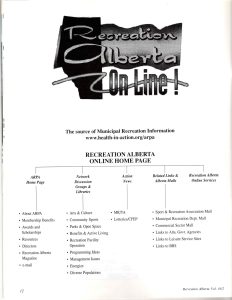
With the introduction of computers into our work and homes, this drastically changed the way in which we communicated. Prior to the late 90s all communication was done via mail – all newsletters, documents and even updates would be sent as hard copies. With the advent of the internet and email communications quickly shifted to online options including websites and email listservs. We cannot understate how much this would change how ARPA would be able to connect and communicate with its members, partners and others. ARPA launched its online presence in 1998 that started as Recreation Alberta online.
Some of the main accomplishments from this decade included:
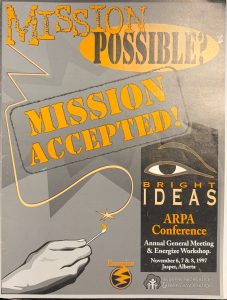
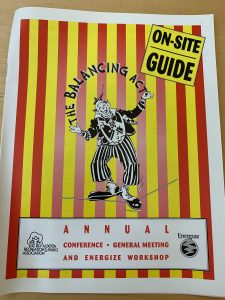
Energize Workshop (1995) – ARPA partnered with the Government of Alberta to host the Energize Workshop, education for elected and appointed officials on topics related to recreation and parks, within the Annual ARPA Conference. This partnership continues to this day.
Regional Recreation Associations – these associations flourished in the 1990s with support provided through grants that could be used for volunteer training and recreation equipment sharing within each region. Each of the seven regional recreation associations met frequently and were supported by regional coordinators.
Provincial government leadership change – Ralph Klein’s government took over in 1992 and had a focus on austerity measures and debt elimination. This led to deep cuts to government services, including those that supported recreation and community development across the province.
Even with these changes, the provincial government continued to play a major role in recreation development and delivery in the province including operating regional field offices with regional coordinators.
Challenges
Funding challenges – this decade saw reductions in provincial government funding for ARPA and this presented challenges to overall sustainability and capacity of the organization.
Talks of ARPA and AARFP amalgamation – there were ongoing conversations about having ARPA and their sister organization, the Alberta Association of Recreation Facility Personnel (AARFP), amalgamate. While the two organizations decided to move forward as separate entities, they formed a strategic alliance that is still active and strong today.
Deliverables
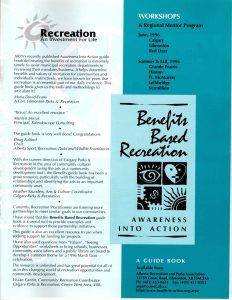
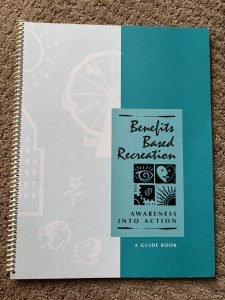
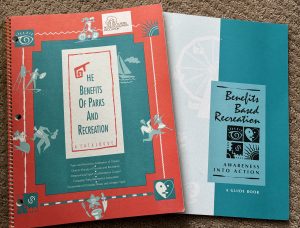
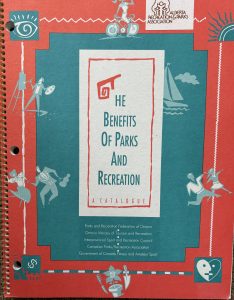
Benefits resources – as previously mentioned, several benefits-based outcomes resources were developed and made available to the sector including The Benefits of Recreation Catalogue and the Benefits Based Recreation: Awareness into Action publications.
Speakers Toolkit – Advocacy & Lobbying Guide – this publication was developed and released in 1994 to support advocacy by members and partners of ARPA.
Advocacy
The main thrust of advocacy this decade focused on changes to the Alberta Lottery Fund and funding to communities. The Alberta Gaming and Liquor Commission (AGLC) was formed in 1996 and the introduction of community lottery boards to distribute gaming funds occurred in 1997.
Arrival of the GST- the federal government introduced the Goods and Services Tax (known as GST) in 1990 and early advocacy was focused on finding answers to how the tax would be applied and impact recreation and parks services and delivery.
Community Recreation/Culture grants – these grants were impacted in the 90s and much of ARPA’s advocacy efforts were directed at trying to retain these valuable grants for communities.
Closer to the end of the decade, the advocacy messaging related to the community recreation infrastructure deficit picked up and led to the release of the “Alberta’s Community Recreation Infrastructure: A Guide to Lifecycle Planning” as well as initial stages of creating a provincial inventory of indoor recreation facilities in Alberta.
The Alberta MR/TA (Municipal Recreation/Tourism Area) Grant Program historically provided financial support and advisory services to community parks, campgrounds, ski hills, and golf courses, with staff providing recommendations to participating organizations. It was aimed at improving regional recreation and tourism infrastructure, often supporting local and regional development initiatives in collaboration with municipal, non-profit, and private partners.
The end of the decade marked a transition for ARPA into the new millennium. When the staff team resigned near the end of 1998, the Board of Directors took the opportunity to undertake a comprehensive organizational review to map out the future of ARPA and how it supported members and the larger recreation and parks sector.
Be sure to read the 2000s decade story to hear what changed.

1980s
The 1980s – The Golden Era for Recreation and Parks?
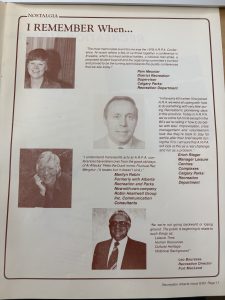
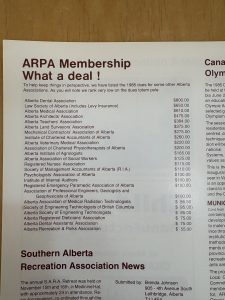
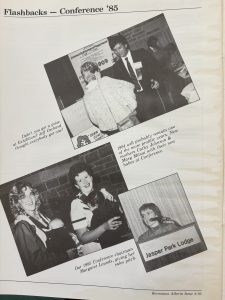
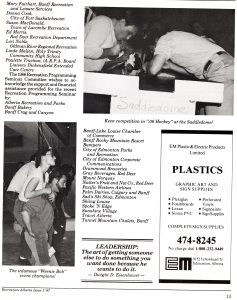
The 80s was a decade of growth, opportunity and expansion for both ARPA and the membership. Following the centennial investments in recreation facilities in the late 1970s, the needs for communities shifted to professionals to activate these spaces and places.
As the Peter Lougheed era continued (1971-1986) further provincial investments shifted to supporting community development and programming of recreation, parks and culture across the province. If there ever was a golden era for recreation and parks development and delivery, the 1980s was that time period.
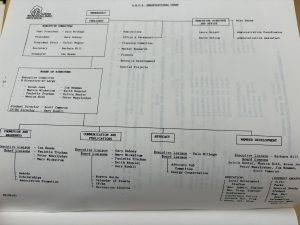
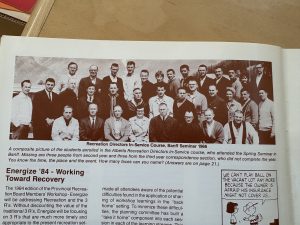
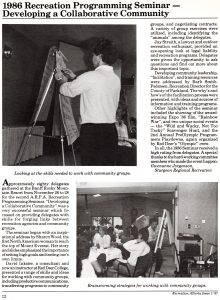
ARPA, as well as others in the recreation and parks space, were trying to keep up with the demand for professional development and training from those in the sector. As the expansion and complexity of recreation and parks delivery continued, so did the demand for new and specialized positions to support that delivery. The old model of a standalone recreation administrator in a community was not meeting the growing demands. Positions such as facility managers, program coordinators, parks managers and community development officers were all being developed and these individuals required new professional development and training to support their specialized work.
ARPA began to offer new offerings outside of the general conferences, including:
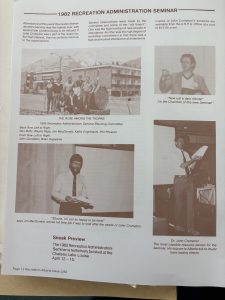
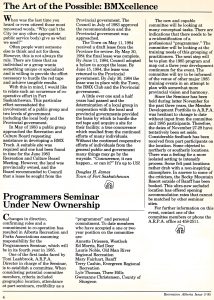
Programming Seminar, Recreation administrators seminar and focused Parks workshops
The 80s also saw substantial growth in the number of non-profit organizations supporting different needs and aspects related to recreation and parks. New organizations emerged with a special focus on persons with disabilities and supporting access to underserved communities.
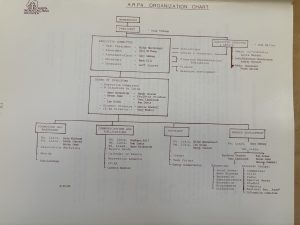
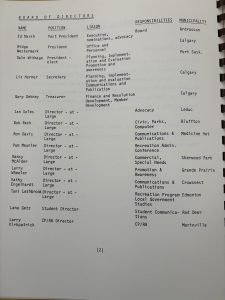
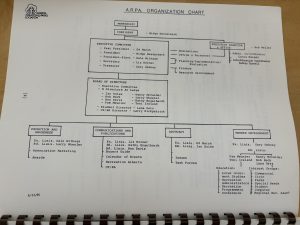
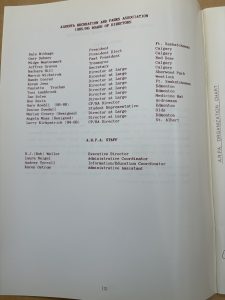
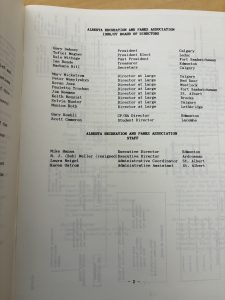
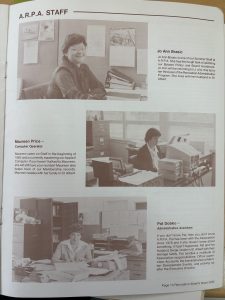
ARPA was fortunate to secure a bump in funding in the late 70s and early 80s that allowed it to secure and sustain a full-time executive director position as well as other administrative and coordination support.
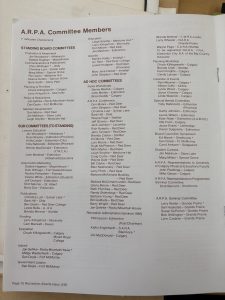
Regional recreation associations were officially established in the mid 1970s and continued to flourish and expand their network and value. ARPA maintained connections with the regional associations and held Regional Association Executive Workshops to bring the regions together to plan and learn from each other.
The Alberta Advisory Board on Recreation for the Disabled (AABRD) disbanded and transferred their remaining funds to the Alberta Sport, Recreation, Parks and Wildlife Foundation and an endowment was established to support ongoing scholarships and awards that ARPA would in turn manage.
Some accomplishments that ARPA had in this decade included:
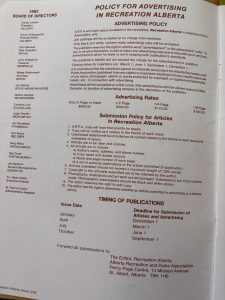
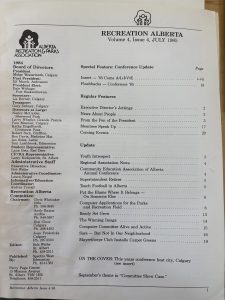
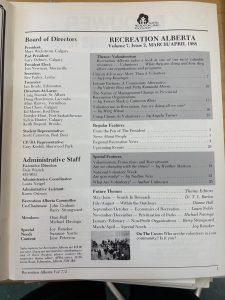
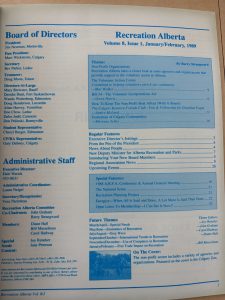
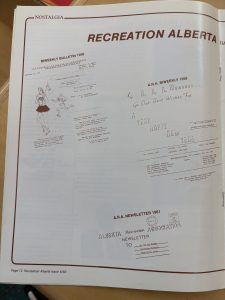
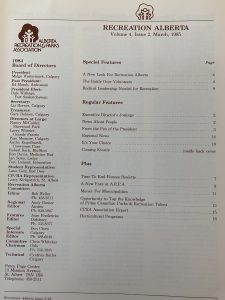
- Expanding the Recreation Alberta magazine to six issues per year and including more research articles
- Secured a ten-fold increase in revenues, mainly due to increased funding from the provincial government
- 6 month reserve fund established
Advocacy
ARPA remained active on the advocacy front in the 80s. Some of the main items included:
- STEP – summer temporary employment program increases
- Change in recreation delivery with demise of recreation boards
- Lottery grants distribution to communities
So, now that we look back – would you say that the 1980s were the golden age of recreation and parks development and delivery?
1970s
The Seventies
In the ’60s, ARPA continued to establish itself as a key player in influencing Alberta’s recreation and parks landscape. With growing professionalism, increasing public demand, and a deeper integration of parks and recreation, ARPA was poised to continue its mission of advocating, educating, and enhancing recreation and parks in Alberta.
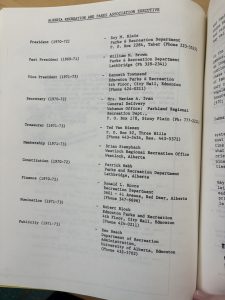
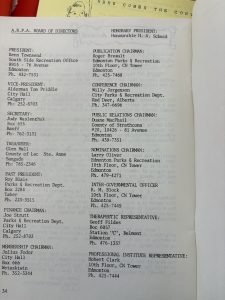
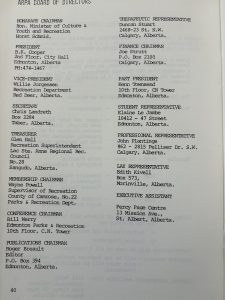
In the early 1970s, the Association prepared a twenty-year history of ARPA and developed a central library.
The seventies were about developing committees and position papers, collaboration and partnerships, education and definition of terms, advocacy, and an association review and action plan.
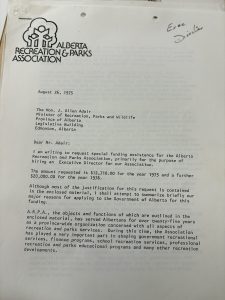
In 1970, ARPA presented a brief to the Minister of Youth, requesting:
- Increased emphasis in recreation services.
- Establishment of a provincial Department of Recreation and Parks.
- Community use designs for schools and involvement of local recreation authorities in the planning, design, and operation of community school facilities.
- The establishment of urban parks in Alberta
- Integration of the regulations of swimming areas under one provincial department. Controls on leasing of waterfront property to individuals
- Financial assistance to enable needy individuals to participate in recreation programs.
- A provincial government subsidy of 80% of the cost of an ARPA executive secretary
This initial report led to the formation of a number of committees and subsequent reports in the seventies:
- A group or committee studied the availability of adequate recreation grant funds to smaller municipalities and advocated for a more effective distribution of funds.
- A community school committee was established to do research, develop a library, and foster the community school concept.
- A committee reviewed and suggested numerous improvements to the Early Childhood Services program, including changes in qualifications, subsidies for disadvantaged children, increases in funding for non-school-operated programs, and the involvement of recreation professionals in planning and administering E.C.S. programs. It is felt that this impacted the formation of Further Education Councils throughout the province.
In 1979, the Delivery of Leisure Services report was distributed to ARPA members and to the Alberta Government.
Collaboration and Partnerships
In 1973, the Association initiated” joint ARPA—Ministers Tours” (joint tours to various Alberta municipalities by the ARPA executive, the Minister, and senior staff of the Department of Culture, Youth and Recreation). The tours were met with mixed reactions. Through the years, ARPA continued to strive for improvement in its relationship with government staff.
As early as 1974, ARPA advocated for integration with CP/RA. In 1978, the two associations signed a joint membership agreement that would commence in 1979.
ARPA, also in the 1970s, attempted to recognize the importance of membership categories and other groups that shared common objectives. It welcomed students and Lay/Civic members formally recognized the Regional Recreation Associations, endorsed the formation of the Therapeutic Recreation Association within ARPA, and developed an affiliation with the Provincial Arts Committee.
ARPA also established an inter-agency group in the mid-seventies to examine a media package outlining recreation and recreation leadership as it related to quality of life. The Association also retained the services of a lawyer to prepare a report on the implications of the proposed new Planning Act.
Education and the Definition of Terms
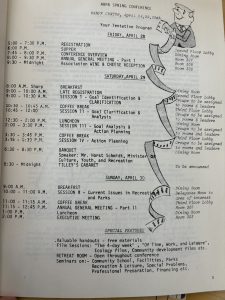
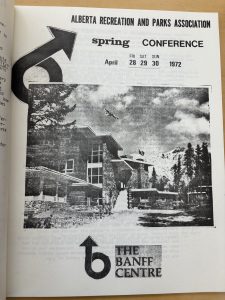
In the early seventies, ARPA realized how difficult it was to plan and schedule two conferences yearly. Municipalities also expressed the financial challenges of supporting staff to attend two conferences yearly. The decision was made to hold the annual conference in the fall. Resolutions at the Annual General Meeting still formed the base for advocacy and the sessions, the education component of the Association.
The announcement of Project Cooperation Grants in 1974 and the Major Cultural/ Recreation Facility Development Program in 1975, by the Alberta Government started a building boom of parks, recreation and cultural facilities in every corner of the province. It also provided substance for conference sessions and a boom for consulting firms as many municipalities, while appreciative of the money, were challenged in completing grant submissions and preparing facility plans.
The grant programs and new collaborations presented ARPA and its members with the need to define and redefine terminology. Many conferences and sessions allowed for discussion about what Park and Recreation included. How did you define leisure, well-being, active living, culture, youth, seniors, subsidy, etc.?
During the late seventies, ARPA hosted several parks workshops and a workshop on energy conservation and the potential for reducing utility rates of public recreation facilities. In 1977, the Association co-sponsored the Recreation Administrators’ Conference. In 1979, ARPA assumed full responsibility for the conference.
Advocacy
ARPA started the decade by advocating for the provincial government to distribute recreation grant funds more effectively. Subsequently, it endorsed the Summer Employment for Recreation Students Program, Project Cooperation, and the Major Cultural/Recreational Grant Program.
The Association requested that the government update its regulations regarding swimming pools and reiterated its request that the government establish urban provincial parks.
It advocated for area athletic games in preference to provincial games to increase the participation of more Alberta athletes.
It petitioned the government to ensure that the 1978 Commonwealth Games included a complete cultural festival as well as traditional athletic events/
Association Review and Action Plan
ARPA was vision-focused in the early 70’s1970s, but with limited financial resources and increased demands on Board members, burnout was occurring. Many board members (particularly past presidents) did not complete their terms on the Board. This certainly represented the ‘ebb and flow’ that occurs in many not-for-profit associations.
The Board decided on three actions:
To continue to advocate for funding for an executive director. To review and revise the Association Constitution and Bylaws.
To create a task force to develop a plan of action for the Association
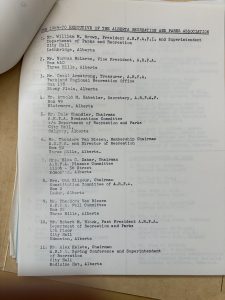
Substantial increases in funding became available from Western Canada Lottery (Alberta Division) and the Provincial Government in 1979. A full-time executive director was hired. The Constitution and Bylaws were approved at the October Conference, and a business plan and actions for the future were in the works. In 1979, the joint agreement with CP/RA was also implemented.
By the end of the decade, the population was 2,237,724, an increase of 37.5%. Significant factors for the seventies:
- increased funding for ARPA
The increased funding allowed for the immediate hiring of an executive director. This allowed the Board to take action on items more timely and pursue additional funding opportunities.
- the Project Cooperation and Major Cultural/Recreational Facility Grant Programs
As mentioned previously, the grant programs resulted in the building of culture and recreation facilities throughout Alberta. ARPA played a significant role in education and providing members with the opportunity to network. The program also resulted in the establishment of many consulting businesses in the province that were planning and facility-focused.
- joint membership with CP/RA
Membership and involvement in both associations increased as a result of the agreement. The networking and learning opportunities were significant as well.
1960s
The Sixties
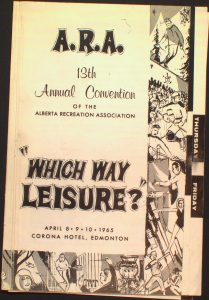
The rapid population growth in Alberta in the fifties provided A.R.A with new challenges and opportunities as it looked forward to the Sixties. In response, the association continued to advocate for better training, facility planning and support for municipalities grappling with rapid expansion of parks, facilities and recreation services. Resolutions presented at spring conferences and resulting meetings with government and other agencies and associations formed the basis of advocacy. The fall conference provided the forum for educational sessions. The Association also worked jointly with the Alberta government and agencies to provide in service and training at the community level.
Success in education
The University of Alberta established a degree in Recreation Administration in 1962 (with the first graduates of the program in 1966). This was certainly seen as a success of A.R.A.’s advocacy.
A.R.A. established a Professional Standards Committee to look at the formation of a professional wing of A.R.A. The Association also partnered with the Alberta Association for Continuing Association.
During the sixties the Association initiated a workshop on Recreation Leadership Skill for those who worked with the aged, it promoted the establishment of a program of training for horticultural, parks maintenance, and facility personnel in Alberta and endorsed the newly developed Recreation Technicians course as the Southern Alberta Institute of Technology.
Advocacy
A.R.A. asked the Government to appoint a consultant in area and facility planning, design, construction, and maintenance. The Association also requested representation on the Provincial Recreation and Culture Board. In this way, it hoped to support municipal members facing development issues with new recreation and cultural facilities.
In 1963, A.R.A. established a provincial and federal parks committee to watch development in the parks field. 1963 also saw the formation of the Reserve system in the new Planning Act. A municipality was now empowered to require dedication, without compensation, of up to 10% of the land that was being subdivided as a reserve. At the same time, Schools were added to parks and recreation as a permitted use for these lands. Little guidance was given in the act regarding decision-making regarding what land to acquire, ownership, exactly how it would be used, or, if not needed, how it would be maintained or sold. This situation gave
A.R.A. a voice in advocating for controls, education, and communication regarding planning issues. Some of these issues were addressed in the 1970 amendment to the act.
In 1963, A.R.A. spoke out strongly against the Government in favour of the retention of adequate school gymnasiums for recreation, amateur athletics, and adult education. This, coupled with the changes in the Planning Act, led to a new and different relationship between parks and recreation and schools. Some were smooth partnerships; others required joint use agreements. All pointed to a need for educational sessions by the Government and A.R.A.
Canada’s Centennial and the Impact on Recreation in Alberta
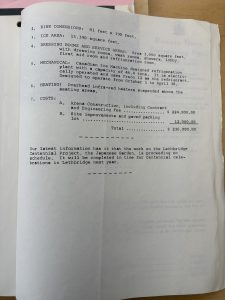
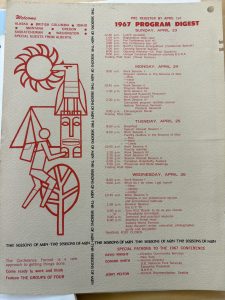
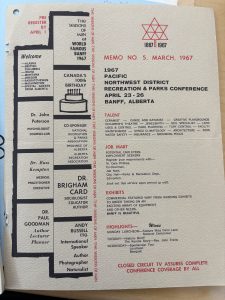
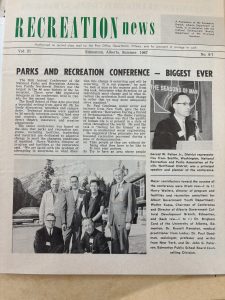
In the mid-’60s, much focus was on the upcoming Canadian Centennial Celebrations in 1967. The Province of Alberta matched the Federal Government grant of $1 per resident to distribute to Canadian projects. The province administered grants for nearly 400 community projects such as memorials, museums, and parks, restoring historic buildings, writing books, composing music, and commissioning artwork. Many municipalities developed parks, hosted July 1 festivals and commissioned music and art. St Paul, perhaps, had the most unique project, building a U.F.O. landing pad.
Administration and Name Change
A.R.A advocated for a central office and executive secretary for the association.
In 1968, the Alberta Recreation Association changed its name to the Alberta Recreation and Parks Association (ARPA), with its principal objective being “the stimulation and advancement of Recreation and Parks services, programs, and development in the province of Alberta.”
In 1969, the Parks and Recreation Association of Canada (PRAC) changed its name to the Canadian Parks/Recreation Association (CP/RA).
It was felt that both these name changes were instigated by Harry Boothman and others in Alberta. Harry, a young horticulturalist from England, rose to become Parks Superintendent in Calgary. When, in the 60s, the City formed a Parks and Recreation Department, he insisted the Department be called Calgary Parks/ Recreation (no and). He believed Parks and Recreation were one; there should not be a ‘green curtain’ or ‘and’ separating them. Harry was a member of A.R.A. and president of PRAC (CP/RA) from 1966 to 1968 and initiated the name of the Canadian Parks/Recreation Association.
In 1971, the population of Alberta was 1,627,875, a 22.1 % increase over the decade.
Significant factors for the sixties
- Professionalism
The introduction of the Recreation Administration Degree at the University of Calgary, the Recreation Technicians Course at SAIT, parks training and recreation
in-service training were a major step toward professionalizing the recreation field in Alberta. Conferences continued to be a source of education and innovation
-
Legislative Advocacy
The Planning Act of 1963 had caught many municipalities and ARPA unprepared. Anticipating further changes, ARPA became more proactive in reviewing the document and, in the 1970s, sought legal counsel to help with the review.
A.R.A. and later ARPA’s position on school and field use by the community lay the foundation for community schools and joint use agreements that developed in the seventies.
-
Name Change and Integration
The integration of parks and recreation under ARPA’s name reflected a broader shift on how parks and recreation profession was evolving and a commitment to advance both parks and recreation at the municipal level.
1950s
The Fifties
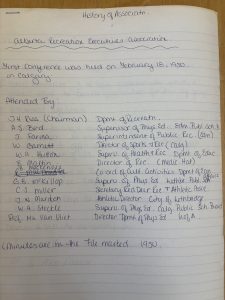
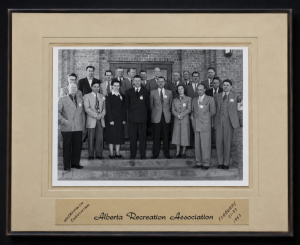
“At various times, it has been suggested that we convene a meeting for Executives engaged in public recreation in Alberta and thus provide an opportunity for them to meet and discuss matters of common interest or concern.” (Quote from an original letter sent to twelve executives of major urban recreation, health, physical education, culture and sports agencies by J. H. Ross, Director of Health and Recreation Branch in the Province of Alberta, Jan. 18, 1950.)
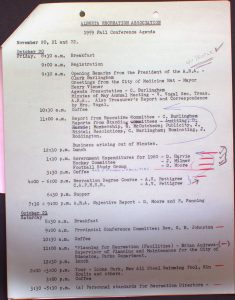
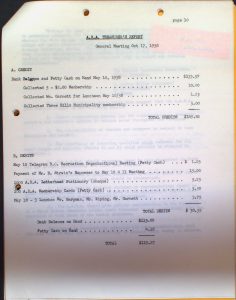
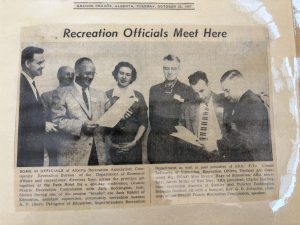
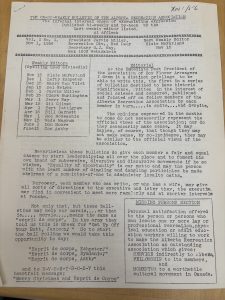
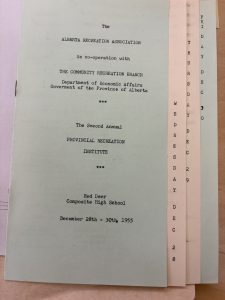
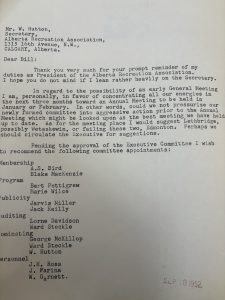
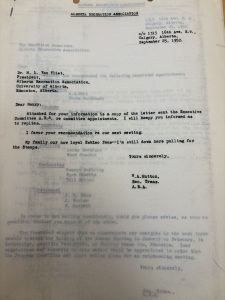
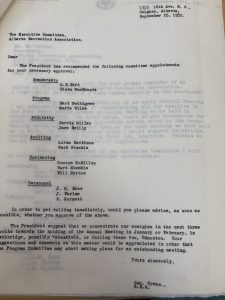
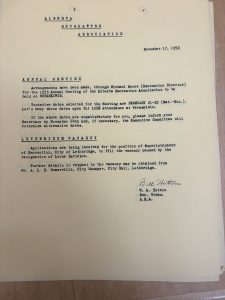
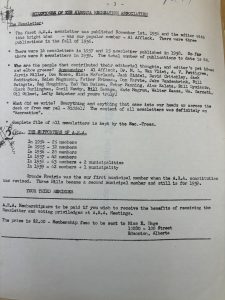
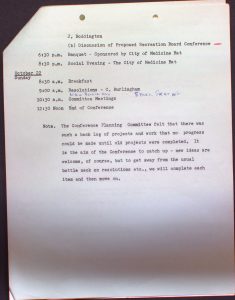
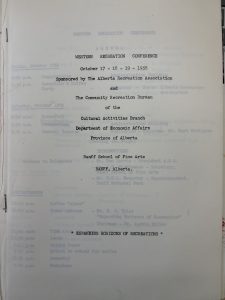
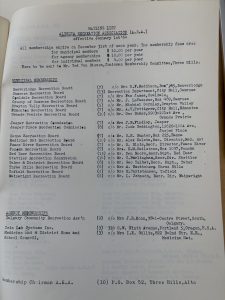
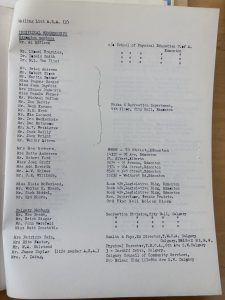
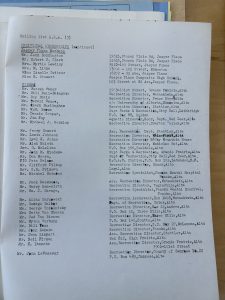
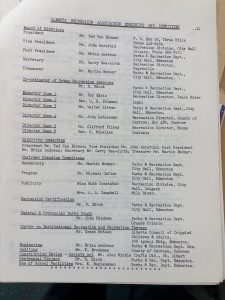
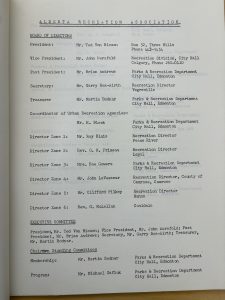
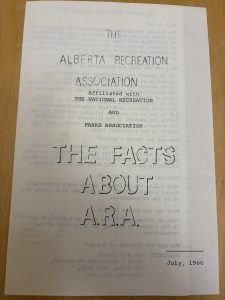
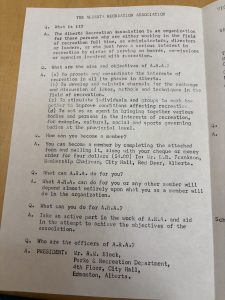
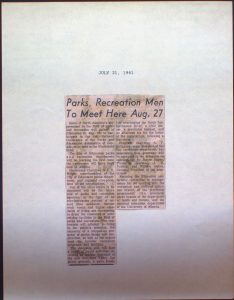
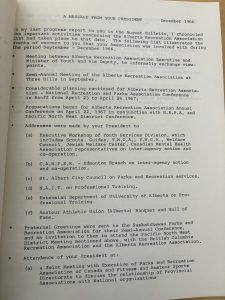
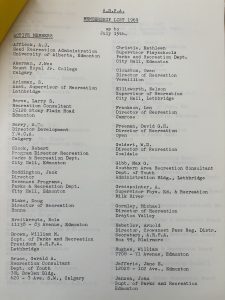
And so it began! The Alberta Recreation Executives Association was initiated at a meeting in Calgary in February 1950. The Constitution and Bylaws were drafted, and the word “executive” was omitted. The Alberta Recreation Association (A.R.A.) was formed in 1951. Membership in the association was $2; as of March 1952, there were sixteen members. Conferences were held twice a year, with the Annual General Meeting and policy development being held in the spring and education forming the fall or winter conference. Conferences continued to be twice a year until the early seventies.
The population of Alberta at the start of 1951 was 939,501.
Recreation and sports in the fifties
In the forties and fifties, most recreation opportunities were provided by church organizations and, in some jurisdictions, by local schools. Private agencies such as Boy Scouts, Girl Guides, Boys and Girls Club, YMCA/YWCAs, and Cadet Corp were the main providers of recreation activities. The Red Cross showed strong leadership in learn-to-swim activities.
After World War II, curling moved from lakes and sloughs to indoor buildings. (Many were club-owned and on private land.) Citizens built rinks on lakes and sloughs and outdoor backyard rinks. Some municipalities provided boards and space for those rinks.
Because those returning from the war were more affluent (some had cars), the 50s saw the development of bowling alleys, movie theatres, and drive-in movies. These were private-sector developments.
Parks in the fifties
It was different for Parks, which was still outside of the mandate of A.R.A.
In 1951, a new Parks Act transferred provincial parks and protected areas to the Department of Land and Forests.
During the 1950s, Albertans had more leisure time, extra income, and vehicles. Demand and funding for parks increased.
The Alberta Transportations Department constructed campgrounds along the highways.
A shift began to happen. Parks were no longer seen as just a place for recreation but for conserving natural and historical features. In 1955, the Dinosaur Provincial Park was developed. In 1957, the Writing-on-Stone/Aisinai’pi Provincial Park was created.
In 1953, A.R.A. requested the government appoint a Director of Physical Education and Recreation for the province.
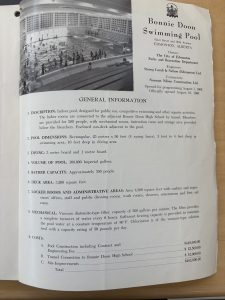
Interest in swimming increased, and many citizens added indoor pools to their residences. The first municipal pool in Western Canada was built in Edmonton in June 1953. The Red Cross continued to be involved in water safety in pools and lakes in Alberta.
In 1954, A.R.A. presented a proposal for affiliation with the Parks and Recreation Association of Canada (PRAC)
A.R.A played a significant role in gathering and sharing information about recreation. This information highlighted the need for municipal government involvement in recreation and parks, and the commitment of tax dollars was recognized.
Municipalities (particularly the larger ones) supported the development of community associations (leagues) and the establishment of Recreation Boards (which advocated for community recreation needs). Recreation Board members and others were welcomed into the association. The larger cities patterned recreation programs after those being implemented in the United States. The Chicago-based American City Managers’ Association publication on municipal recreation and parks became the guidebook for that period.
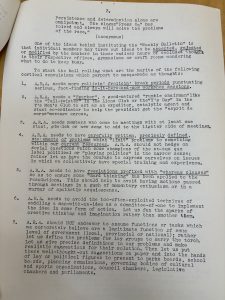
In 1956, A.R.A. petitioned the Alberta Hockey Association to eliminate rough play in hockey. A year later, they again petitioned the Alberta Hockey Association to eliminate body checking in Midget and lower age classifications.
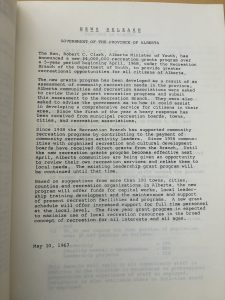
In an effort to improve financial support for programs, A.R.A. requested the Government of Alberta to provide per capita grants to recreation organizations through the municipalities.
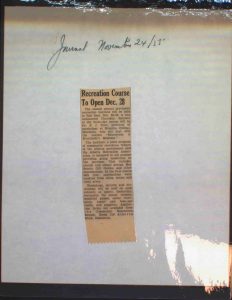
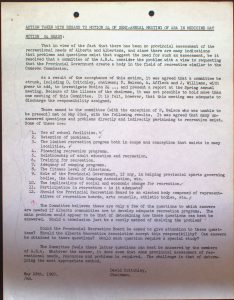
In 1959, in an effort to establish a Recreation Degree Program, an education committee was formed to approach the University of Alberta with the request.
Towards the end of the 50s, more municipalities started to invest in arenas and indoor and outdoor pools. This led to a desire for more programming, and often, the arena managers or local hockey or other sports coaches became the first recreation staff in a community. They had little knowledge or understanding of recreation as a social force or community asset. The provincial government and the
A.R.A. provided training and mentorship, particularly at its fall/winter conferences.
During that time, provincial grants were provided to encourage municipalities to employ people with higher qualifications.
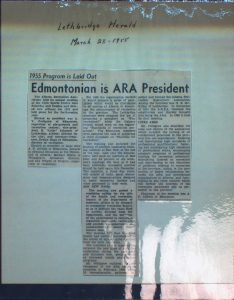
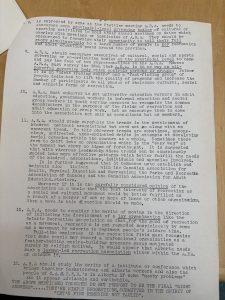
By the end of the 50’s, A.R.A. had established itself as a vital player in Alberta’s recreational landscape. It had also begun to push for the professionalization of recreation services, advocating for better training and higher qualifications for staff. The A.R.A. had also implemented an award for “Outstanding Contribution to Recreation”.
The population at the end of the decade was 1,331,944; this was an increase of 41.8%.
Significant factors for the 1950s
- post war affluence:
With more income and leisure time, Albertans began to invest in recreation and parks, creating a boom in recreational development. Many of those
opportunities were private and family oriented. Bowling, golf, curling, tennis and gymnastics were private or commercial.
Some funding, however, was service club based. The Kinsmen, the Rotary Clubs and others, at the local level, became involved in park and playground construction. Local businesses and parents became the sponsors for field and arena activities.
At the start of the fifties recreation was still seen as an unstructured activity that usually happened within a park. Through the fifties, municipalities and communities lobbied for involvement and responsibility for recreation. Funding however for recreation lagged behind that of parks and organized sports.
-
legislative changes
The Park’s Act of 1951 was crucial in formalizing park management and protecting natural areas. Parks was a capital and physical asset, a resource worth preserving and protecting.
-
the formation of A.R.A.
The formation of A.R.A. as an influencer to public policy became crucial as both an education advocate and as a representative of municipal opinion.
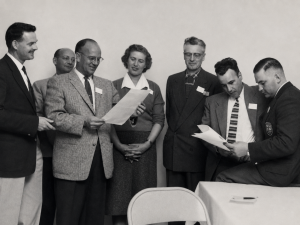
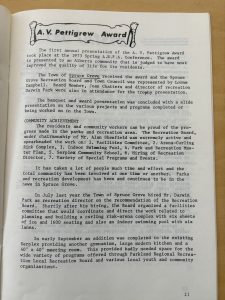
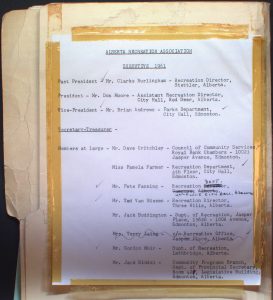
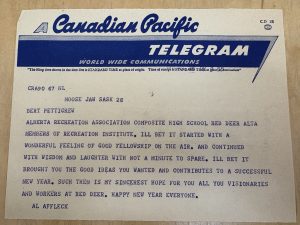
Much of the early direction of A.R.A. and its focus on education and government were a direct result of the founders which included: J. Ross, M. Van Vliet, A.V. (Bert) Pettigrew, E. McFarland, B. Hutton. A. Affleck and Jack Riddell.
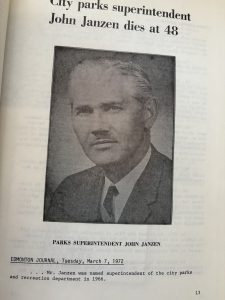
With the addition of early municipal employees in the recreation field such as R. Blais, D. Moore, T. Van Beizen, J. Janzen, and H. Boothman, support and respect for the association and advocacy for recreation improved.
-
Educational push
ARPA increasingly recognized the need for education and training for recreation professionals laying the groundwork for formal degrees and professional development. Conferences and in-service training took on new significance.