The ARPA Infrastructure Committee: Building the Case for Alberta's Recreation Infrastructure
By the turn of the 21st century, Alberta’s recreation infrastructure faced a growing challenge. Many of the arenas, swimming pools, curling rinks, and community centres built during the recreation boom of the 1970s were reaching the end of their expected lifespans. Facilities that had served generations of Albertans were showing increasing signs of wear, yet there was little provincial data to demonstrate the scale of the issue.
Recognizing the need for evidence, the Alberta Recreation and Parks Association (ARPA) identified aging infrastructure as a strategic priority during Board planning discussions in 2000 and 2001. What began as a partnership between ARPA, Calgary Parks and Recreation, and Alberta Community Development soon evolved into one of the province’s most comprehensive assessments of community recreation infrastructure.
The ARPA Infrastructure Committee was formally established in 2001, bringing together representatives from ARPA, the Alberta Association of Recreation Facility Personnel, the Alberta Association of Agricultural Societies, regional recreation associations, Hockey Alberta, Alberta Infrastructure, and Alberta Community Development. Their shared objective was straightforward: understand the condition of Alberta’s recreation facilities before they reached a critical point.
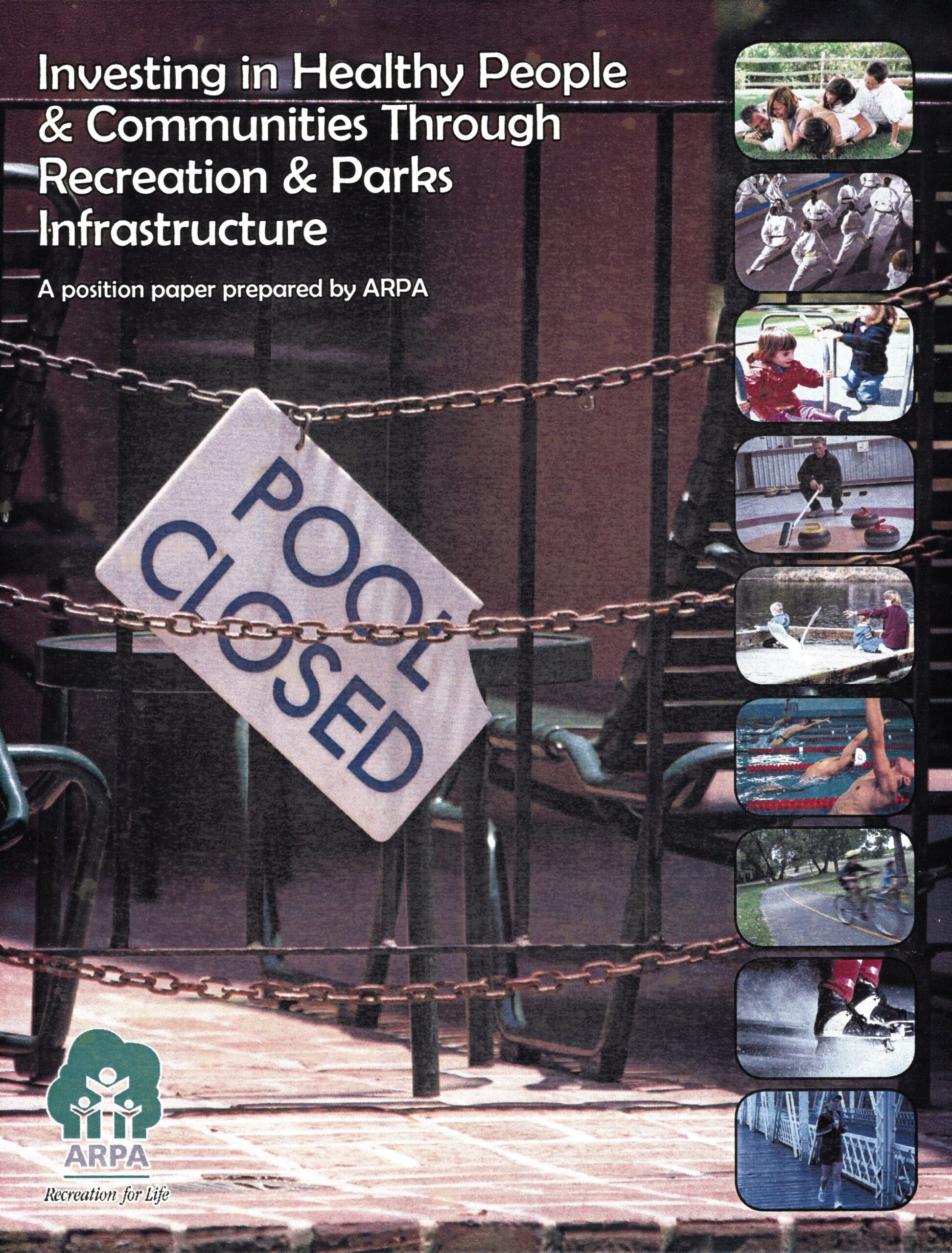
The committee’s first achievement was creating a province-wide inventory of municipal recreation infrastructure. More than 460 arenas, curling rinks, swimming pools, and multiplexes were identified, representing an estimated replacement value of nearly $2.8 billion. The inventory confirmed what many recreation professionals had suspected: by 2001, roughly three-quarters of Alberta’s recreation facilities were at least 25 years old.
A key contributor to the project was Alberta Infrastructure, particularly Terry Bociurkiuw, who introduced assessment tools and methodologies originally developed for schools and healthcare facilities. Using these proven approaches, architects and engineers conducted detailed on-site inspections of more than 130 recreation facilities across Alberta, evaluating structural, mechanical, electrical, and architectural systems while identifying priority repairs and long-term replacement needs.
The findings were sobering. Many facilities faced deteriorating building envelopes, outdated mechanical systems, building code deficiencies, and mounting maintenance costs. The committee estimated that basic upgrades alone would require approximately $330 million province-wide. These results were published in the Community Recreation Infrastructure in Alberta: 2006 Updated Facility Assessment Report, which became an essential resource for municipalities, recreation leaders, and government decision-makers.
The committee’s work extended beyond facility assessments. It also examined operating challenges, including the impact of utility deregulation on recreation facilities, and contributed expertise to municipal, provincial, and federal infrastructure discussions. Most importantly, it transformed anecdotal concerns into credible evidence that governments could use when making investment decisions.
That evidence helped shape one of Alberta’s most significant recreation infrastructure investments: the Alberta Major Community Facilities Program. Introduced in 2007, the program provided $280 million in matching funding for 228 sport, recreation, and cultural infrastructure projects across the province. Although the program concluded in 2009, it established a foundation for subsequent provincial investment initiatives, including the continued evolution of the Community Facility Enhancement Program.
Story submitted by Darrell Melvie