
Go Girl! - Putting Girls at the Centre of Active Living
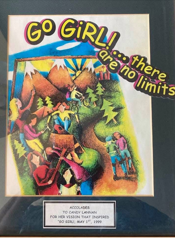
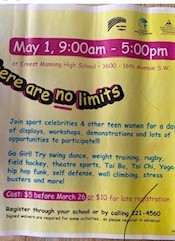
In May 1999, Ernest Manning High School in Calgary housed a new kind of recreation event. “Go Girl!…There Are No Limits” brought together 379 participants for a day focused on helping teenage girls discover opportunities for active living, build awareness of health and wellbeing, and take ownership of their participation in recreation and sport.
The idea began in 1998 when Calgary recreation professionals Virginia Moore and Candy Lannan attended a Canadian Association for the Advancement of Women, Sport and Physical Activity (CAAWS) presentation on women and sport. The presentation highlighted familiar barriers, including unequal support, limited media attention, sponsorship challenges and harassment.
A conversation with Lannan’s teenage daughter prompted a different approach. She felt the presentation was interesting but spoke more about issues affecting adults her age than teenagers. That observation led Moore and Lannan to talk with girls in their programs, their own families and colleagues, and to look more closely at research on girls’ participation in physical activity.
The findings were concerning. Girls, particularly those aged 13 to 15, were dropping out of physical activity at a rapid rate and often did not return. They faced pressures involving school, employment, family responsibilities, finances, body image, peer relationships and changing bodies and abilities.
The response was Go Girl!, not another lecture about healthy living, but a day built around choice, participation and fun.
Forty-six 45-minute sessions offered everything from swing dance, fencing and rugby to tai chi, yoga, funk dance and nutrition. There were also climbing sessions and a session provocatively titled “I Am Not a Barbie Doll.” More than 1,100 individual session attendances were recorded.
What made the event particularly distinctive was the role of teenagers themselves. Of the 379 participants, 238 were teen delegates, while 23 teens volunteered and another 25 demonstrated their sports and activities. Teens also served as session moderators, tour leaders, photographers, first-aid personnel and event volunteers.
The organizers deliberately placed young people at the centre of the event as contributors and leaders. The event also reflected a broader shift in recreation programming. Girls had expressed frustration with information delivered in a formal or “lecture” format, so Go Girl! offered something more interactive and welcoming. There was no keynote and no formal lunch hour; participants could move between activities, displays and sessions throughout the day.