
Benefits of Recreation Movement – The Big Shift
In the early 1990s, recreation, parks, and leisure began to take on a larger role, one that extended far beyond fun and games. As governments and healthcare systems grappled with rising costs and declining public wellbeing, recreation emerged as a powerful contributor to healthier individuals and stronger communities. Long before the term Lifestyle Rx entered the public conversation, recreation professionals understood that nature, physical activity, social connection, and leisure were essential to health. This understanding formed what became known as the Benefits Movement.
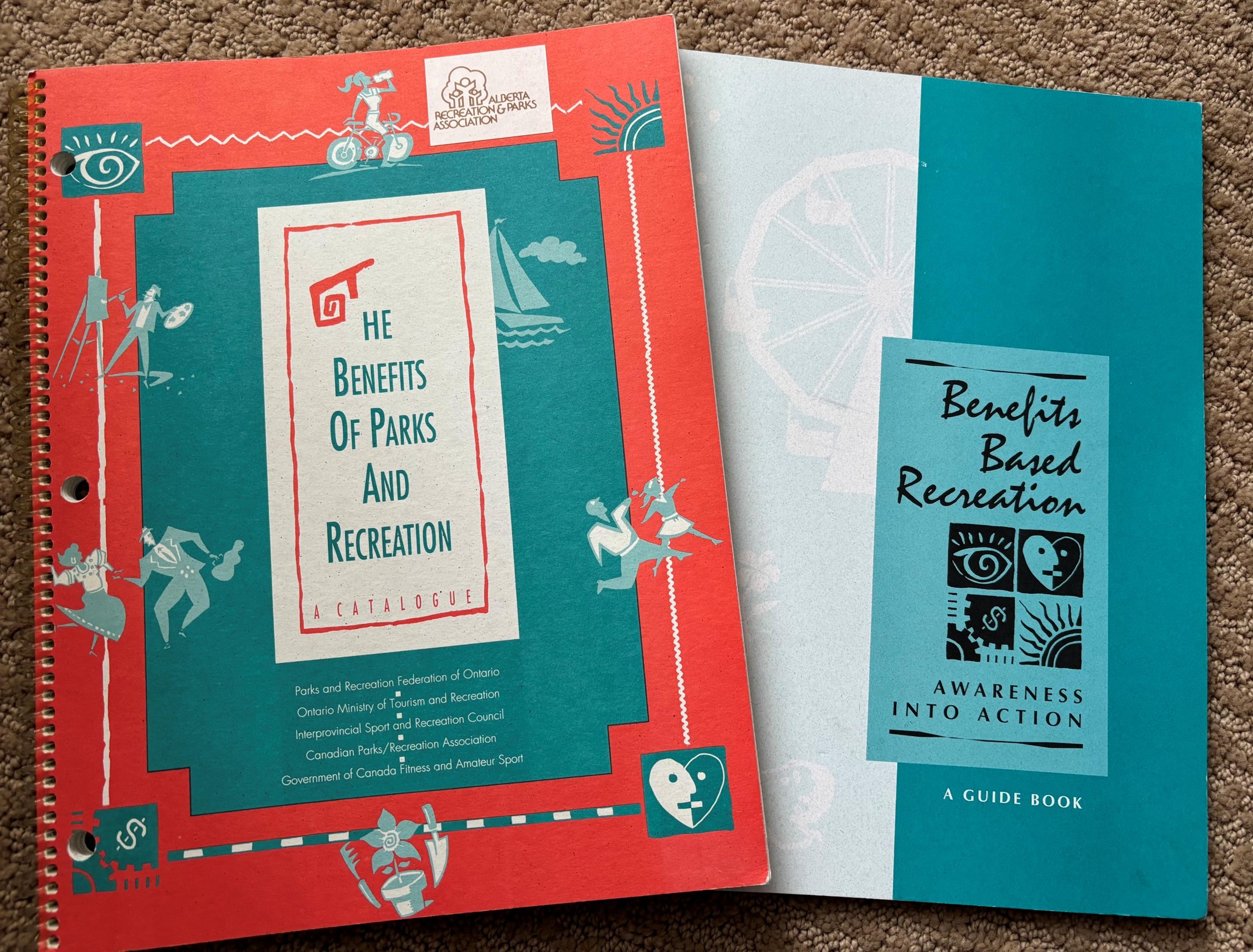
The movement gained momentum at a critical time. Faced with significant budget cuts to the recreation sector, Ontario introduced the Benefits Catalogue in 1992, compiling a growing body of research that demonstrated the measurable value of recreation and parks. Building on this work, ARPA developed Benefits-Based Recreation: Awareness into Action, helping translate research into practical advocacy. For the first time, recreation professionals had evidence-based tools to justify funding, strengthen partnerships, inspire volunteers, and increase participation. Recreation could now understood as an essential investment in community wellbeing.
The benefits lens also transformed how programs were designed and delivered.
Guided by a simple motivational framework: Need → Drive → Means → Outcome
Recreation was understood as the means through which fundamental human needs could be met. Whether fostering belonging, improving physical and mental health, building confidence, or strengthening communities, recreation became a deliberate pathway to positive outcomes rather than simply an activity in itself.
Although public-sector cutbacks, fragmented leadership, and increasing competition from sport and active living initiatives slowed the movement’s momentum, its influence endured. Across Canada and later in the United States, Australia, and the United Kingdom, the Benefits Movement reshaped the way the sector understood and communicated its purpose. Its lasting legacy was a transformative idea: recreation is not optional. It is essential to healthy people, resilient communities, and a thriving society.
“Having the opportunity to be part of the Benefits Movement work in my own communities, through ARPA, across Canada and beyond enabled me to create many amazing relationships.” — Kate Sparrow